
What Are Meeting Minutes?
Meeting minutes are the official written record of what was discussed and decided during a meeting. They aren’t a transcript of every word said, but a structured summary of key topics, decisions, action items and who’s responsible for each follow-up. Good minutes give anyone who wasn’t in the room a clear, accurate picture of what happened and what needs to happen next.
Why Meeting Minutes Matter
Minutes aren’t just a formality for board meetings — they create accountability. When action items and owners are written down and shared afterward, tasks are far less likely to fall through the cracks. Approved minutes provide a reference when participants need to confirm what was agreed. For board meetings specifically, minutes often carry legal weight and may be required for compliance or audit purposes.
What to Include
Solid meeting minutes typically cover the date, time and location, attendees and absentees, and approval of the previous meeting’s minutes. They also include a summary of each agenda item discussed, any decisions or votes taken, action items with assigned owners and deadlines, and the time the meeting adjourned. Keep the language factual and concise — minutes record outcomes, not opinions or word-for-word debate.
Types of Meeting Minutes
Different meetings call for different levels of detail. Action minutes focus almost entirely on decisions and assigned tasks, skipping the discussion that led to them. They’re useful for fast-moving team meetings. Discussion minutes summarize the key points raised by different attendees. These are useful when the reasoning behind a decision matters as much as the decision itself. Formal minutes record motions, seconds when required, and voting outcomes according to the organization’s procedures. They are distinct from a verbatim transcript, which records spoken words. They may be referenced later for compliance. Choosing the right level of detail up front matters. It saves you from either over-documenting a routine check-in or under-documenting a decision that needed a clear paper trail.
Tips for Taking Better Minutes
Prepare using the meeting agenda as your outline before the meeting starts. That way you’re filling in a structure rather than writing from a blank page. Focus on capturing decisions and action items word-for-word, but summarize general discussion rather than trying to transcribe it. If you’re unsure what was decided on a point, ask for clarification before the meeting moves on. It’s much easier than trying to reconstruct it afterward. Finally, distribute the draft minutes promptly and give attendees a chance to correct anything before they’re considered final.
Free Meeting Minutes Templates
Choose from the downloadable files below. Each retained preview has an associated file link; check the file format before opening it in your software.
Company Meeting Minutes Template
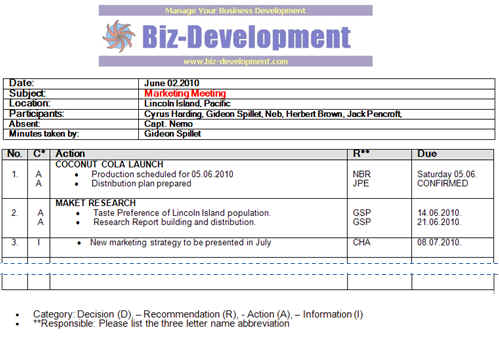

Completed Meeting Minutes Example
Operations meeting, 12 October, 10:00–10:30. Attendees: Aisha, Ben and Omar. Chair: Aisha. Recorder: Omar. Purpose: agree the next delivery plan. Decision: proceed with supplier B’s revised delivery schedule, subject to written confirmation. This fictional example records the outcome without reproducing the conversation.
| Action | Owner | Due | Completion evidence |
|---|---|---|---|
| Confirm revised delivery date | Ben | 14 October | Supplier confirmation email |
| Update customer timetable | Omar | 15 October | Revised schedule shared |
Mark the document “Draft” until the appropriate review or approval is complete. For a formal meeting, add quorum, motions and votes where your governing rules require them. Keep later corrections traceable rather than silently replacing an approved record.
Prepare the discussion with a meeting agenda, transfer agreed tasks to an action plan, and use a weekly status report to track progress between meetings.
Frequently Asked Questions
Who should take meeting minutes?
Ideally someone who isn’t leading the discussion. That way they can focus on capturing decisions and action items objectively, rather than participating and writing at the same time. In formal settings this is usually a designated secretary.
How soon should minutes be shared after the meeting?
Within 24 to 48 hours is standard practice. Sending them out while the discussion is still fresh makes it easier to catch errors. It also keeps action items top of mind for the people responsible for them.
Do minutes need to be approved before they’re final?
In formal settings like board meetings, yes — minutes are typically presented as a draft and formally approved at the start of the next meeting. This gives attendees a chance to correct any inaccuracies before they become the official record.
What should I do if I disagree with how a discussion was recorded?
Raise it during the approval step at the next meeting rather than letting it go. Minutes can be corrected before final approval. Once approved, though, they typically stand as the official record going forward.

You must be logged in to post a comment.