
What Is a Likert Scale?
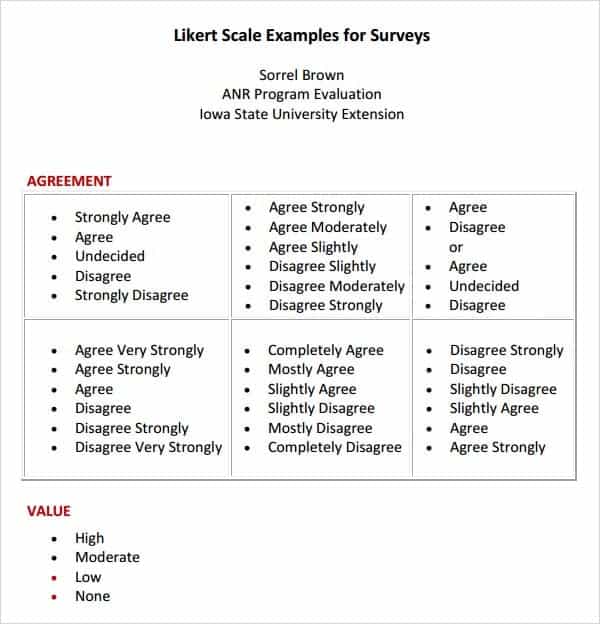
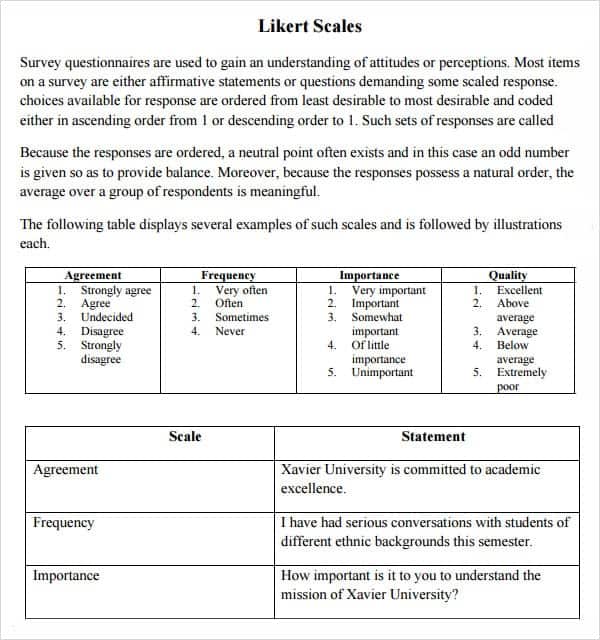
A Likert scale is a rating scale used in surveys and questionnaires to measure how strongly a respondent agrees or disagrees with a statement. Developed by psychologist Rensis Likert in 1932, it typically offers five or seven response options — for example, Strongly Disagree, Disagree, Neutral, Agree, Strongly Agree — and it remains one of the most widely used tools in market research, academic studies and employee or customer feedback surveys because it turns subjective opinions into data you can actually analyze and compare across respondents.
Where the Likert Scale Came From
Likert introduced the scale in his 1932 dissertation as a way to measure attitudes more rigorously than a simple yes/no question could. His original method used a 5-point scale and summed responses across multiple related statements to produce an overall attitude score — a technique still used today in psychometrics and survey design. Nearly a century later, the same core idea holds up because it balances simplicity for the respondent with enough granularity to produce meaningful statistical results.
When to Use a Likert Scale
Likert scales work best when you’re measuring attitudes, opinions or perceptions that don’t have a simple yes/no answer — satisfaction with a product, agreement with a workplace policy, confidence in a skill, or comfort with a new process. Because every respondent answers using the same fixed scale, you can compare results across a group, track changes over time, and calculate averages that a plain open-text question can’t give you.
5-Point vs. 7-Point Scales
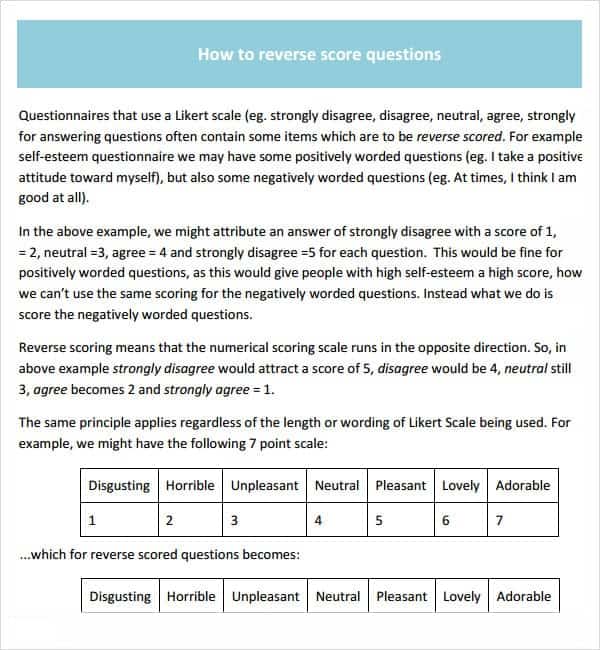
A 5-point scale is easier for respondents to answer quickly and is the more common choice for general surveys. A 7-point scale gives finer-grained results and is often preferred in academic or clinical research where more precision is needed. Either way, keep the wording of each point balanced and evenly spaced — avoid scales that lean more positive than negative, since that skews your results before anyone even answers.
How to Write Good Likert Scale Statements
The quality of your results depends heavily on how the statements are worded. Keep each statement focused on a single idea — a statement like “the product is affordable and easy to use” actually asks two separate questions and will confuse respondents. Avoid leading or loaded language that nudges people toward a particular answer, and mix positively and negatively worded statements throughout the survey so respondents can’t simply click the same answer down the whole page without reading.
Analyzing Likert Scale Results
Once responses are collected, the most common approach is to assign each point on the scale a numeric value (for example, 1 for Strongly Disagree through 5 for Strongly Agree) and calculate the average response per statement. Some researchers treat Likert data as purely categorical rather than numeric, since the “distance” between Agree and Strongly Agree isn’t guaranteed to be mathematically equal — which approach you choose depends on how rigorous your analysis needs to be.
Free Likert Scale Templates
Below are 8+ Likert scale templates in Word and PDF format, ready to customize with your own statements and download for free.
Example of Likert scale

Likert Scales Free Template
Likert Scale Template Word
Likert Rating Scales Template
Likert Scale Template for Free
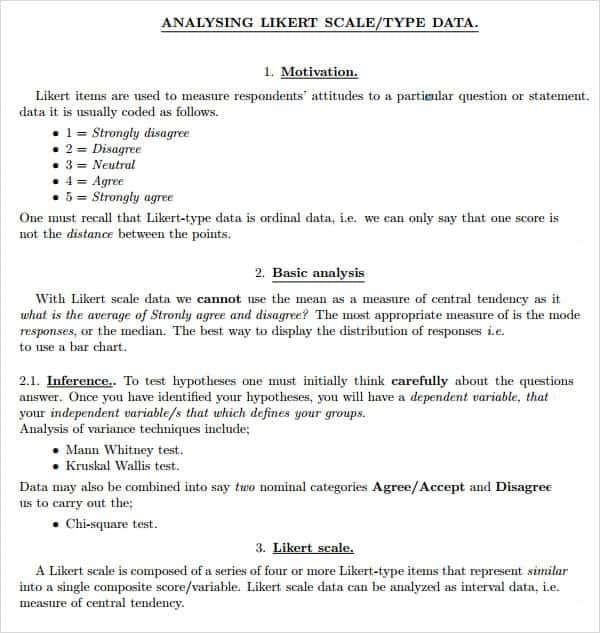
Likert Scale Questionnaire Free
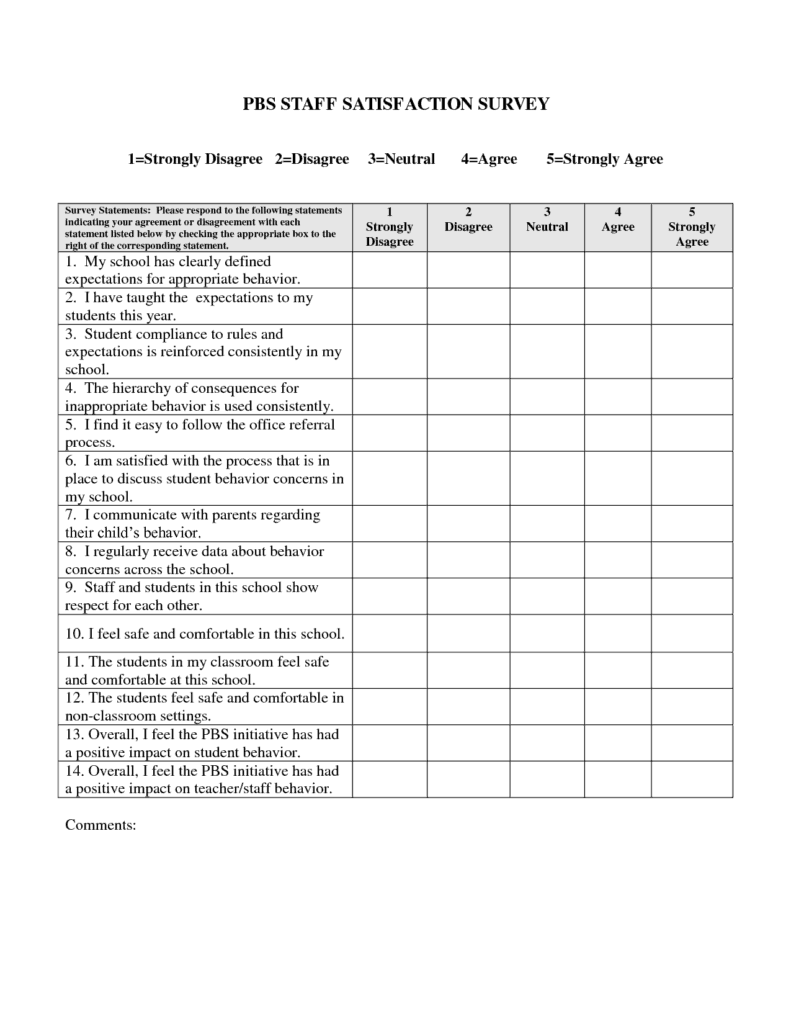
Likert Scale Example in Word
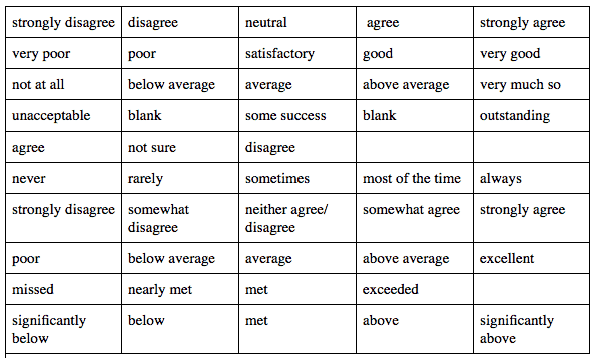
Likert Scale Questions Template
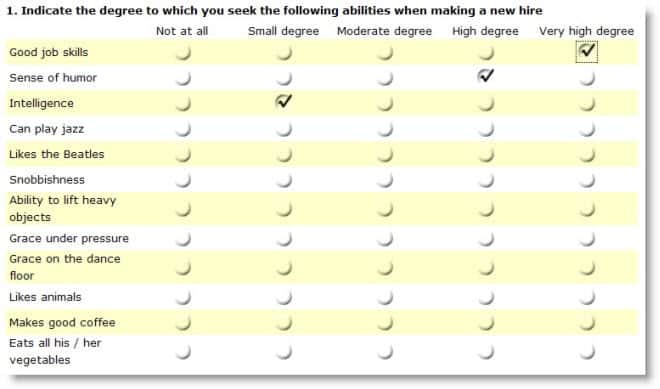
Frequently Asked Questions
How many questions should a Likert scale survey have?
There’s no fixed rule, but most well-designed surveys keep it between 5 and 15 statements per topic. Too few and you won’t get reliable data; too many and respondents start rushing through or dropping out.
Should I always include a “neutral” middle option?
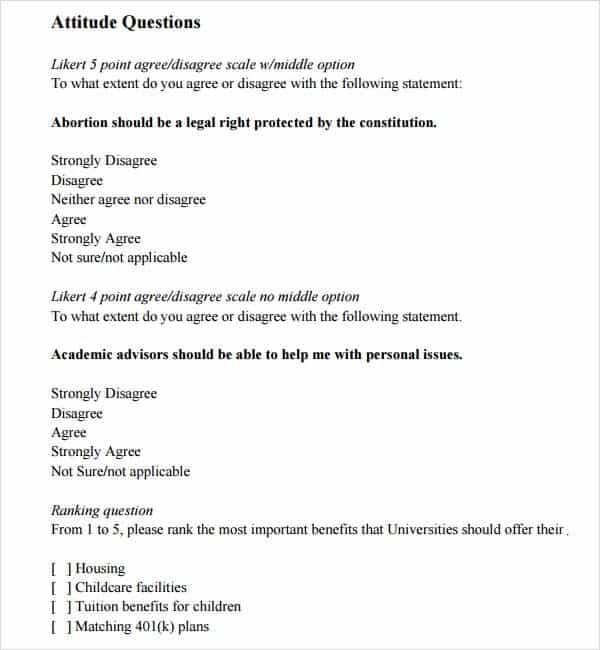
It depends on your goal. An odd-numbered scale (5 or 7 points) gives respondents a neutral middle ground, while an even-numbered scale forces them to lean one way or the other — useful when you specifically want to avoid fence-sitting answers.
Can a Likert scale be used for customer satisfaction surveys?
Yes, it’s one of the most common tools for exactly that. A satisfaction-focused scale often relabels the endpoints as “Very Dissatisfied” to “Very Satisfied” rather than “Disagree” to “Agree,” but the underlying structure and analysis are the same.
What’s a common mistake people make when building a Likert scale?
Using an unbalanced scale is the most frequent error — for example, offering three positive options and only one negative one. This subtly pushes respondents toward agreement and skews your data before anyone even answers.

You must be logged in to post a comment.