
What Is a Meeting Agenda Template?
A meeting agenda template is a ready-made document that lays out the structure of an upcoming meeting before it happens. It covers the topics to be discussed and the order they’ll be covered in. It also notes who is responsible for each item and how much time is allotted to each point. Instead of building an agenda from a blank page every time a meeting is scheduled, you can download one of these templates and fill in your meeting details. You’ll then have a clear, professional agenda ready to send to attendees within minutes. Meeting agenda templates are used across every setting imaginable, from small team check-ins to formal board meetings. They also work well for sales meetings and community gatherings.
Why a Meeting Agenda Matters
A meeting without an agenda tends to run long, wander off topic, and leave attendees unclear about what was actually decided. A well-prepared agenda solves all of this by giving everyone a shared understanding of the meeting’s purpose before it even starts. It helps the meeting organizer stay on schedule and gives attendees a chance to prepare relevant questions or materials in advance. It also creates a reference point that can be compared against the meeting minutes afterward. For recurring meetings, a consistent agenda format also makes it easier for attendees to know what to expect each time. That keeps meetings efficient and productive.
What to Include in a Meeting Agenda
A solid meeting agenda typically includes the meeting title, date, time, and location (or video call link). It should also list attendees and their roles. The body of the agenda should break down each discussion topic, ideally with an estimated time allocation. It should also note the name of the person leading that portion of the discussion. Many agendas also include a section for prior action items that need to be followed up on. It’s also worth leaving space at the end for open discussion or next steps. Distributing the agenda ahead of time, rather than at the start of the meeting, gives attendees the chance to prepare. This makes the meeting itself far more productive.
Types of Meeting Agenda Templates
Meetings vary widely in purpose, which is why the templates below cover many different formats. You’ll find general meeting agenda templates for everyday team meetings and sales meeting agenda templates built around performance and pipeline discussions. There are also staff meeting agenda templates for internal updates and board and advisory meeting agenda templates for more formal governance discussions. Project kickoff agenda templates for launching new initiatives round out the list. There are also community meeting agenda templates for public or neighborhood gatherings, along with printable, Word, and PDF formats. Pick whichever style fits your meeting and your workflow.
Tips for Creating an Effective Meeting Agenda
Keep each agenda item focused and specific rather than vague — “Discuss Q3 budget” is more useful than simply “Budget.” Assign a realistic time limit to each topic so the meeting doesn’t run over. Then stick to it as closely as possible during the meeting itself. Send the agenda to attendees at least a day in advance so they have time to prepare. Always leave a few minutes at the end for questions or next steps. If your meetings are recurring, consider keeping a running template. That way, previous action items can be carried forward and tracked over time instead of getting lost between meetings.
Download a Free Meeting Agenda Template
Choose from the downloadable files below. Each retained preview has an associated file link; check the file format before opening it in your software.
Get Meeting Agenda Templates:




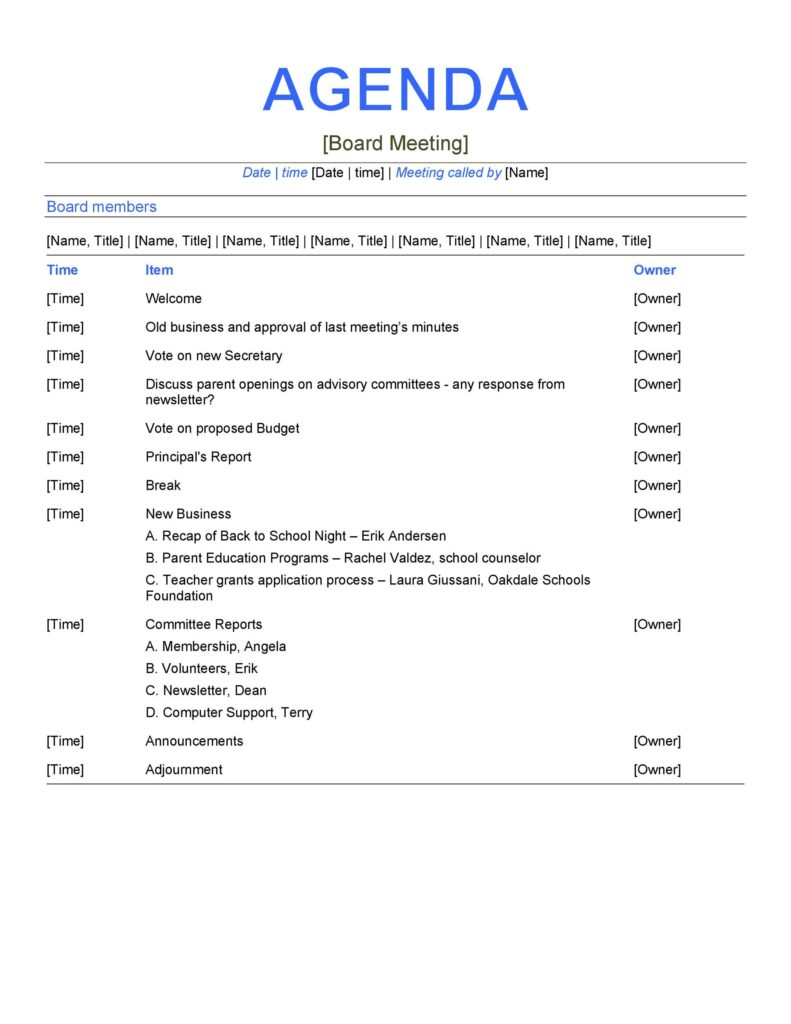


Agenda Template

Sales Meeting Agenda Template

Sales Meeting Agenda Template

Meeting Agenda Template Free

Meeting Schedule Template

Agenda Template

Business Meeting Agenda Template

Staff Meeting Agenda Template

Meeting Agenda Template for Staff Meeting

A Decision-Focused 30-Minute Agenda
Use five minutes to confirm the objective and previous actions, ten minutes to review options, ten minutes to make the named decision, and five minutes to assign next steps. Write “Choose a supplier for the November order” rather than “Supplier discussion.” State who presents the options and attach the information participants need to read beforehand.
An agenda describes the intended discussion before a meeting. Minutes record the decisions afterward. For recurring meetings, carry forward only actions that still need attention and give each agenda item an expected outcome: inform, discuss or decide.
Continue the meeting workflow with our meeting minutes templates, action plan templates, weekly status report templates.
Frequently Asked Questions
What should be at the top of a meeting agenda?
The top of a meeting agenda should include the meeting title, date, time, location or video call link, and a list of expected attendees. That way, everyone knows exactly when, where, and who is involved before the meeting begins.
How far in advance should a meeting agenda be sent out?
Sending the agenda at least one full day before the meeting is a good general rule. This gives attendees time to review the topics, gather any materials they need, and prepare questions or updates in advance.
Can I reuse the same meeting agenda template for recurring meetings?
Yes. Most meeting agenda templates, including the ones on this page, are fully editable. You can save a master copy and reuse it for every recurring meeting, updating only the topics and time allocations each time.
What’s the difference between a meeting agenda and meeting minutes?
A meeting agenda is prepared before the meeting to outline what will be discussed. Meeting minutes, by contrast, are recorded during or after the meeting to document what was actually said, decided, and assigned as follow-up action items.

You must be logged in to post a comment.