
A skills assessment template helps you rate current skills, identify gaps and plan what to develop next. Job seekers use them for career planning, and managers use them to review employee skills and training needs.
This page links to five free skills assessment examples in PDF, covering career planning, career development and workplace skills.
What’s Included
- A career planning skills assessment example
- A career development skills assessment template
- A career skills assessment worksheet
- A general skills assessment template
- A worker skills assessment sample
| Template | File format | Hosted on |
|---|---|---|
| Career Planning Skills Assessment example | External site | |
| Career Development Skills Assessment template | External site | |
| Career Skills Assessment Template | External site | |
| Skills Assessment Template for free | External site | |
| Worker Skills Assessment sample Template | External site |
Download the Free Skills Assessment Templates
These examples are hosted on other websites and open from their original source. Click a preview or download button to view a file.
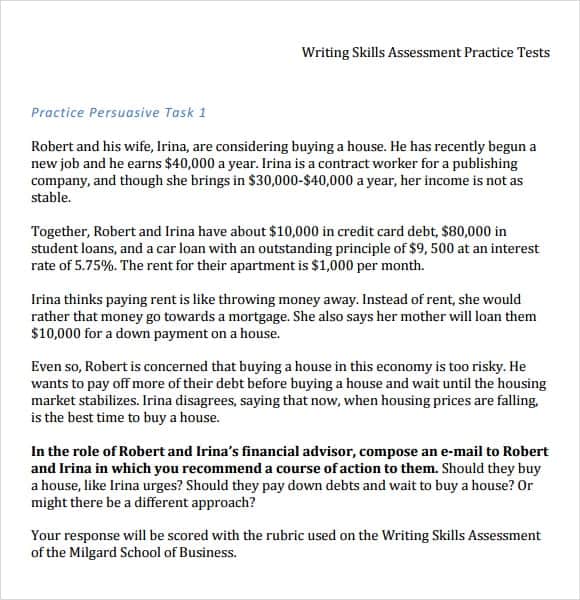
Career Planning Skills Assessment example

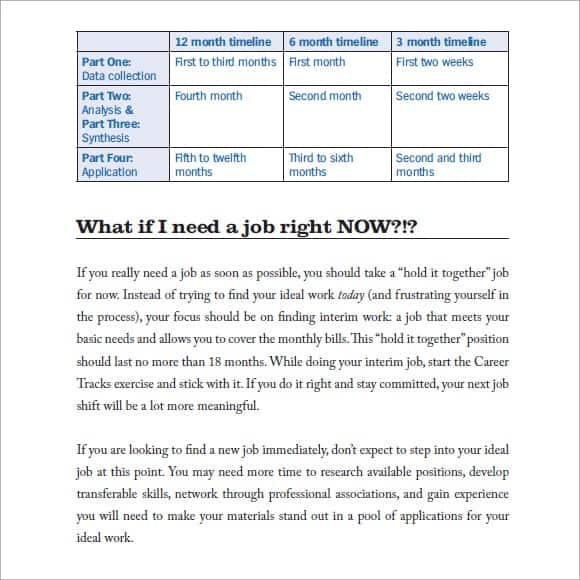
Career Development Skills Assessment template
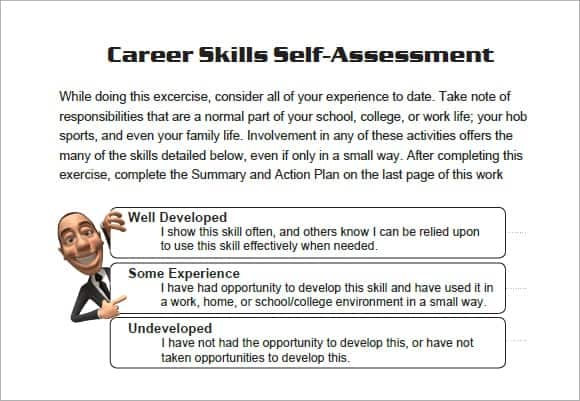
Career Skills Assessment Template
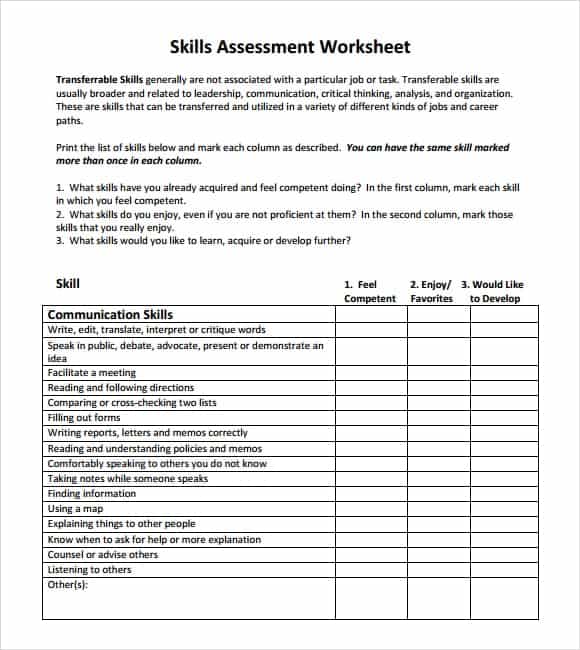
Skills Assessment Template for free
Worker Skills Assessment sample Template
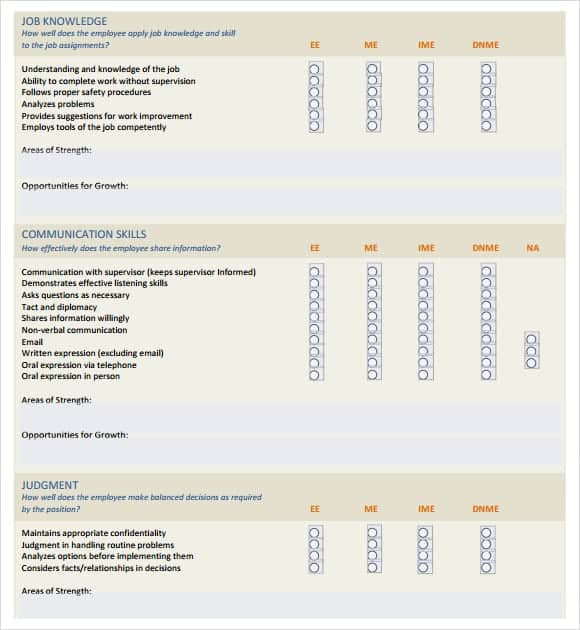
How to Use These Templates
- Decide the purpose: career planning, hiring, performance review or training needs.
- List the skills that matter for the role or goal.
- Agree a rating scale and describe what each level means.
- Rate each skill using evidence such as examples or results.
- Identify the biggest gaps and the skills to build first.
- Turn the findings into a short development plan.
Who It’s For
Skills assessments suit job seekers, students, career counsellors, managers, HR teams and trainers.
- Career planning and job searching
- Employee performance and development reviews
- Training needs analysis
- Hiring and selection
Tips for an Accurate Skills Assessment
- Use clear rating anchors. Describe what ‘beginner’ or ‘expert’ looks like.
- Base ratings on evidence. Examples are more reliable than impressions.
- Combine views. Self-assessment plus manager feedback gives a fuller picture.
- Focus on relevant skills. Assess what the role or goal actually needs.
- Follow up. Review progress after training or practice.
Use Evidence-Based Rating Anchors
For a spreadsheet skill, define 1 as “needs step-by-step support,” 3 as “completes the standard task independently,” and 5 as “handles exceptions and explains the method to others.” Add anchors for intermediate levels before rating anyone. In a fictional development review, a score of 3 might be supported by a correctly reconciled monthly workbook; “good with Excel” is too vague to justify a rating.
Keep the task, evidence, rating and next practice goal in separate columns. Agree one development action and a review date. A general worksheet does not substitute for a formal credential assessment by an authorized body.
Define response labels with our rating-scale examples, prepare a consistent discussion with job interview questions, and record development commitments in an action plan.
When a development course is complete, record the specific training and completion date using a certificate of completion template. The certificate should reflect the issuer’s actual completion criteria.
Frequently Asked Questions
What is a skills assessment?
A skills assessment is a structured way to measure a person’s abilities against the skills needed for a role, goal or career path.
How do I assess my own skills?
List the skills you need, rate yourself honestly against clear descriptions, and back each rating with an example.
What is the difference between hard and soft skills?
Hard skills are technical or job-specific, such as software use. Soft skills are interpersonal, such as communication and teamwork.
Related Templates
- Action Plan Templates
- Certificate of Completion Template
- Job Interview Questions
- Likert Scale Templates
Open a free skills assessment template above and get a clear picture of your strengths and next steps.

You must be logged in to post a comment.