
What Is a Telephone Message Template?
A telephone message template is a structured form used to record the key details of a phone call. It typically captures the caller’s name, contact number, the time and date of the call, and the reason for calling. It is commonly used by receptionists and office administrators. Anyone else who answers calls on behalf of another person or a company relies on one too. Rather than jotting notes on scrap paper that can easily get lost, a telephone message template creates a clear, consistent record. That record can then be handed off or filed for future reference. Some offices keep a bound pad of these forms right next to the phone. Others print them as needed or fill them out digitally. Either way, the goal is always the same. A call taken on someone else’s behalf should never get lost or forgotten before it reaches the right person.
Why Telephone Message Templates Matter
Telephone message templates matter because they prevent important details from being forgotten or miscommunicated. In a busy office, a call taken on someone else’s behalf needs to be relayed accurately. A structured template ensures nothing important, like a callback number or the urgency of the message, gets left out. Using a consistent format makes it easier for the person receiving the message to quickly scan for the information they need. That beats deciphering a handwritten note. For businesses, well kept telephone message records can also serve as a helpful reference. They come in handy if a dispute or misunderstanding about a call ever comes up later. They also help new receptionists or temporary staff get up to speed quickly. A standardized form makes it obvious what information needs to be gathered on every call. Staff don’t need to rely on memory or informal habits picked up on the job.
What to Include in a Telephone Message Template
A complete telephone message template should include the caller’s name, their phone number, and the date and time of the call. It should also note who the message is for, along with a brief summary of the message or reason for calling. Many templates also include a checkbox section for common follow up actions, such as “please call back,” “will call again,” or “urgent.” This helps the recipient quickly understand what response is expected. Leaving space for the name of the person who took the message is also useful. It helps in case any follow up questions come up later. A best time to call back field is another common addition. It helps the recipient avoid playing phone tag by reaching out when the caller is actually available. That beats guessing at a convenient time.
Types of Telephone Message Templates
Telephone message templates come in a few common styles. A classic “while you were out” pad is a small, tear off form. Receptionists traditionally use it to leave a quick note on someone’s desk. A more detailed telephone message form includes additional fields, such as call priority or a longer message section. This style suits offices that handle more complex calls. A digital or Excel based telephone message log allows multiple calls to be tracked in one running spreadsheet. This is useful for teams that want a searchable digital record instead of individual paper slips. There are also carbonless duplicate pads, which automatically create a copy of each message as it is written. This gives the person who took the call a backup record, in case the original slip is misplaced. It also helps if the details need to be double checked later.
Tips for Using a Telephone Message Template
Keep a stack of printed telephone message templates within easy reach of the phone. That way, you’re always ready to jot down details the moment a call comes in. Always repeat key details, such as the caller’s name and number, back to them before ending the call to confirm accuracy. Deliver messages to the intended recipient promptly, since a delayed message can be just as unhelpful as a missing one. If your office fields a high volume of calls, consider switching to a digital log. That way messages can be searched and referenced later without digging through paper slips. It also helps to place a small stack of pens near the message pad. Nothing slows down an urgent callback more than searching the desk for something to write with. That’s especially true while a caller waits on hold.
Why a Consistent Format Matters Across a Team
When everyone on a team uses the same telephone message template, messages become far easier to hand off between coworkers. Each person already knows exactly where to look for the caller’s name, number, and urgency. There’s no need to read through an unfamiliar layout. This is especially helpful in shared reception areas or front desks where more than one person may answer the phone throughout the day. A consistent format also makes training new staff much simpler. They only need to learn one system, rather than adapting to whatever shorthand the previous person happened to use. Over time, keeping every message in the same style also makes it easier to spot patterns. You might notice a client who calls frequently, or a recurring issue that keeps coming up. These patterns become visible simply by flipping back through a stack of past messages.
Download Free Telephone Message Templates
Choose from the downloadable files below. Each retained preview has an associated file link; check the file format before opening it in your software.
Telephone Message Form Template


Blank Telephone message sample
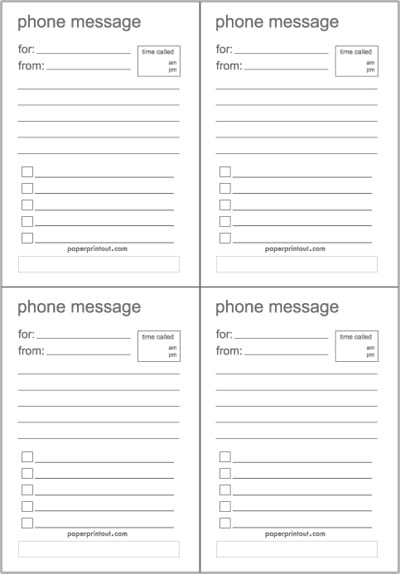
Telephone Message Slip Sample

Take a Message Someone Can Act On
A fictional message reads: “For: Sam. From: Noor at Eastside Printing. Received: 14 October, 11:10. Please call back on the verified number by 15:00 about approval of proof EP-22. Taken by: Lee.” Repeat the callback number and deadline to the caller before ending the call, then send the message through the agreed channel.
Use one message slip per request and add a delivery or acknowledgement field when the handoff matters. A telephone message passes a specific request to a recipient; a phone log records the history of many calls. Do not mark a message resolved merely because it has been forwarded.
Keep the handoff consistent with our phone log templates, client information sheet templates, standard operating procedure (sop) templates.
Frequently Asked Questions
Why use a telephone message template instead of scrap paper?
A telephone message template ensures every important detail, such as the caller’s name, number, and reason for calling, is captured consistently. This reduces the risk of a message getting lost or miscommunicated.
What information should a telephone message template include?
A telephone message template should include the caller’s name, phone number, and the date and time of the call. It should also note who the message is for, along with a brief summary of the message.
Are telephone message templates still useful in a digital office?
Yes, many offices use a digital or spreadsheet based telephone message log so messages can be searched and referenced later. Others still prefer printed pads for quick, on the spot note taking.
Can I customize a telephone message template?
Yes, the telephone message templates below can be downloaded and customized in Word or Excel. They can be adapted to match your office’s branding and preferred format.

You must be logged in to post a comment.