
Begin with the details you know and one small, true thing about the person. You do not have to summarize a whole life in the first sentence. These obituary templates provide a place to gather the announcement, memories and arrangements, then shape them into wording the family is comfortable sharing.
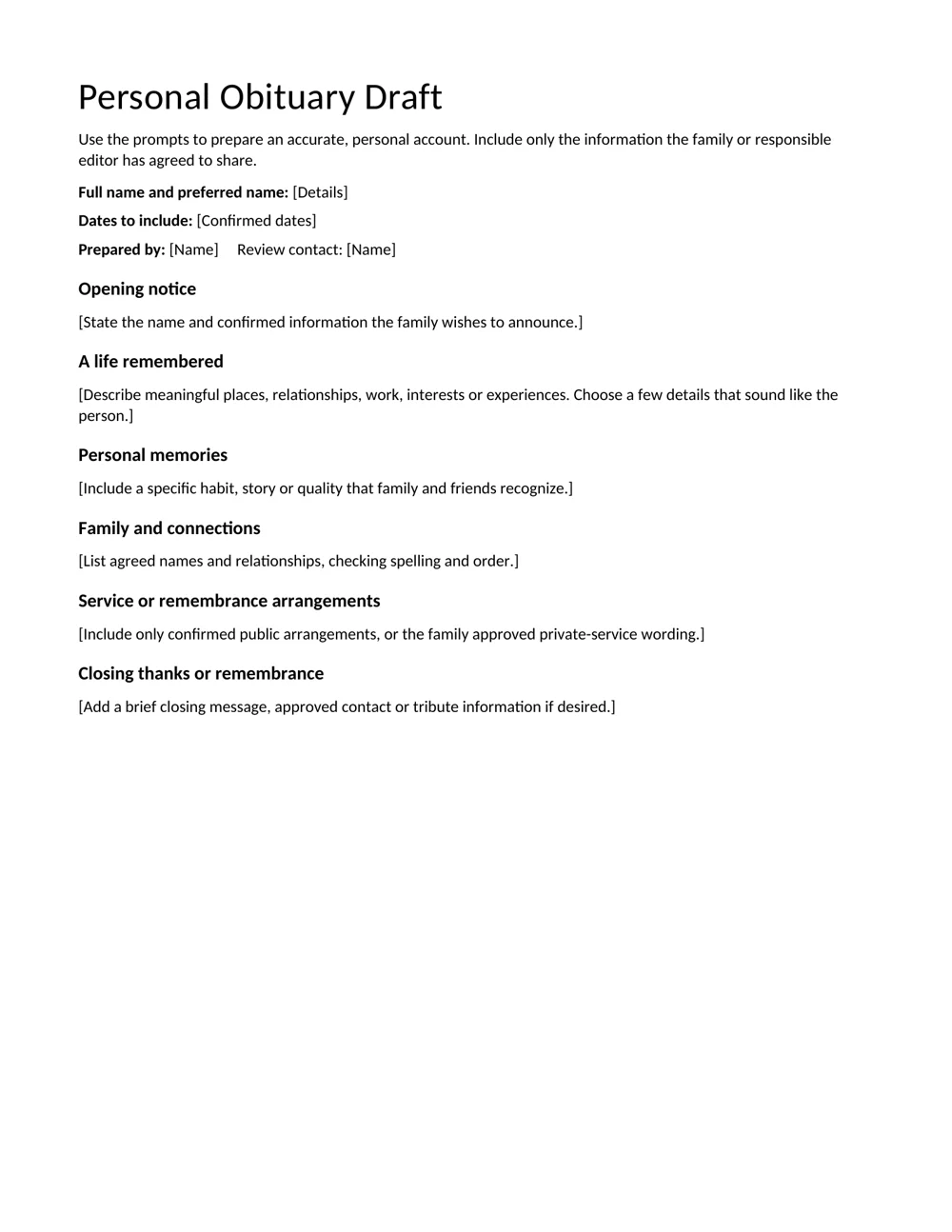
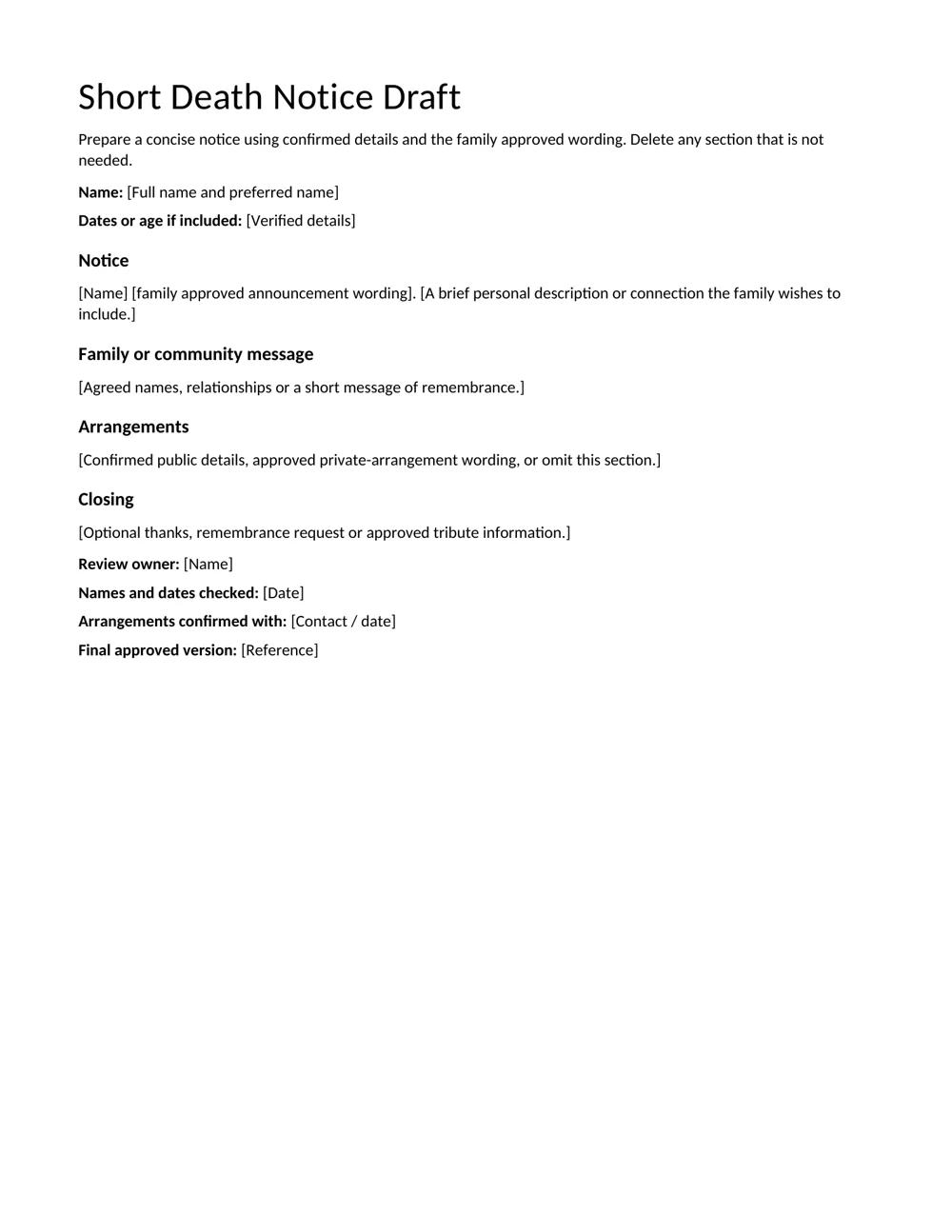
The longer Word format supports a personal obituary. The shorter file helps prepare a concise death notice. Both are editable prompts, not finished accounts of a real person, and every optional section can be changed or removed.
View the two downloadable Word templates
Decide what this piece needs to do
A short notice may simply announce a death, identify the person and share the arrangements the family wishes to make public. A personal obituary gives more space to relationships, interests, experiences and the details that made the person recognizable to those who knew them.
Choose the purpose before deciding how much to write. A publication’s available space, the intended audience and the family’s wishes may shape the result. Ask the actual publisher or organizer about its requirements rather than assuming a template supplies them.
The full obituary file includes prompts for an opening notice, life details, a memory, agreed family information, arrangements and a closing. The short notice keeps those elements brief and optional, with review fields to help check the final copy.
You can prepare notes first without deciding immediately what will be published. A simple outline can separate confirmed facts, memories to discuss and questions still awaiting an answer.
Leave room for the family to choose the tone. Some prefer direct, plain wording; others want a more personal or faith-based expression. There is no need to add a sentiment, explanation or religious reference that does not belong to the person and the people preparing the notice.
Gather the facts without turning the draft into a formality
Write down the full name and the preferred or familiar name the family wants to use. Confirm spelling, including the names of relatives or other people who will be mentioned. A small spelling error can be difficult for those people to encounter in a public notice.
Check dates and any age before including them. The birth date, date of death and date of a remembrance gathering serve different purposes and can be confused when several people contribute notes. Keep the source or confirming person in the working record.
Include places, work or community connections because they help tell the person’s story, not because every possible biographical field must be filled. A list of positions and dates may be accurate while leaving little sense of the person.
A biography template can help organize a longer chronology if that is useful. The obituary itself can then choose the details that matter for its purpose rather than reproduce the entire timeline.
Do not guess to make the draft look complete. Keep an uncertain detail in a separate question list until someone can confirm it. Omitting a nonessential fact is often more appropriate than presenting a disputed memory as settled information.
Choose a few memories that sound like the person
Ask for a specific moment, habit or interest. What did visitors notice? What did the person enjoy explaining, making, collecting or doing with others? A modest detail can carry more meaning than a string of broad words such as wonderful, generous and unforgettable.
For example, a draft might describe someone who always kept an extra chair at the kitchen table or who knew exactly which path to take for the first spring flowers. These are illustrative ideas, not details to insert unless they are true to the person being remembered.
Let an action show a quality where possible. Instead of writing only that someone was patient, a real memory of helping a child repair the same bicycle several times may express that patience more naturally.
Check a story with the people involved before publishing it. A memory can be affectionate and still be too private for a public notice. The aim is a recognizable account that the family has chosen to share, not the most striking anecdote available.
You do not need to make every life sound grand or exceptional. Work, friendship, ordinary routines and the ways people cared for one another can be enough. Keep the voice close to the person rather than borrowing a formal style that makes them difficult to recognize.
Draft the announcement, then let the story follow
A direct opening can use the person’s name and the confirmed information the family wants to announce. If a date or age is included, check it rather than relying on a remembered calculation. The cause of death does not have to be added simply because another notice includes one.
A short-notice structure might be: “[Full name], known to family and friends as [preferred name], [approved announcement wording]. [Brief agreed family or community message]. [Confirmed arrangements, if public].” Replace the brackets with verified wording and remove anything not needed.
For a longer obituary, follow the opening with a small number of connected paragraphs. You might move from a place or relationship that shaped the person’s life to an interest, a contribution and a memory. A strict birth-to-death sequence is not the only way to make the account understandable.
Keep the family or relationship paragraph clear. Agree which names and relationships will be included and how they will be expressed. Avoid trying to resolve a sensitive family question by silently changing the published wording.
Read the draft for repeated ideas. If several sentences say the person cared deeply for others, keep the most specific expression and make room for another real detail. The piece can remain warm without repeating the same tribute in different adjectives.
Share arrangements only when they are ready to share
Confirm any public service or remembrance details with the responsible organizer. Check the date, time, venue and the wording the family has approved. A tentative arrangement should not become a public invitation because it was entered in a draft.
If arrangements are private, use a simple statement the family is comfortable with or omit the section. Do not add an address, contact number or meeting detail merely to fill the template. The shorter notice is designed to work without every optional heading.
Where the family wishes to include a tribute, flower preference or donation request, confirm the actual details and any named organization. A copied line from another notice may refer to an unrelated cause or an outdated arrangement.
Choose an appropriate contact route for questions. A public notice does not necessarily need a private home address or a personal telephone number. Keep the information proportionate to the purpose and the audience receiving it.
If arrangements change after an approved version is shared, identify the correction clearly and contact the relevant publisher or organizer through its process. Updating a file on one person’s computer does not update a notice already distributed or printed.
Give the family review a clear, manageable shape
Choose one person to consolidate comments so the draft does not become several conflicting versions. Others can still contribute memories and corrections, but a clear review owner helps everyone identify the current wording.
Ask reviewers to check facts and tone separately. A name or date correction is different from a preference about phrasing. Mark unresolved questions in the working notes rather than allowing several different answers to remain in the body.
A short review checklist can cover names, dates, relationships, arrangement details, permission to share a memory and the final version. Keep the checklist out of the issued notice once it has served its purpose.
Read the text aloud if that helps the family hear its voice. Remove language that feels borrowed or uncomfortable. A simple sentence the family recognizes can be more fitting than a polished phrase nobody would naturally use.
Allow the piece to remain modest. The review does not need to produce a complete account of every relationship or event. It needs to produce an accurate, agreed piece that serves the chosen audience and respects what the family has decided to share.
Prepare the final copy without carrying over the working notes
Check the actual file or text being submitted. Remove bracketed prompts, unanswered questions, review initials and instructions that were useful only during preparation. Confirm that the final version is the one the responsible people approved.
If a photograph will accompany the notice, choose an appropriate image through the family’s process and check the publisher’s actual format requirements. The supplied Word files do not include a portrait of a real person. A photograph is optional to the writing format.
Preview a printed or exported copy when layout matters. A long name, extra paragraph or inserted image may change the page. Keep the text readable rather than forcing the entire account into a small area simply to preserve a one-page draft.
Retain the approved wording and any correction reference in the agreed place. The completed notice may be useful for the family later, while the private working notes can be handled separately.
The templates are there to reduce the burden of starting from a blank page. They can hold the details while the family decides what feels right. The finished piece belongs to the person being remembered and the people who know which parts of that life they wish to share.
Download the 2 editable Word templates
Personal Obituary Draft
A guided obituary format with space for life details, memories, agreed family information and confirmed remembrance arrangements.
Short Death Notice Draft
A shorter announcement format for a concise notice, with optional remembrance and arrangement sections.
Frequently asked questions
Which file is better for a brief announcement?
Use the short death notice format. It supports a concise announcement with optional family, arrangement and closing sections.
Do I have to include the cause of death?
The template does not require it. Include only the information the family has agreed to share and follow the actual publisher’s relevant process.
Can I remove the family or service section?
Yes. The sections are editable prompts. Remove or change them to fit the purpose, confirmed arrangements and the family’s wishes.
Should the obituary include every life event?
No. Choose accurate details that serve the piece and help readers recognize the person. A few meaningful memories may be more useful than a complete chronology.
Who should approve the final wording?
Agree a responsible review contact with the family or relevant organizer. Check names, facts, arrangements and the version being submitted before it is issued.

You must be logged in to post a comment.