
What Is a Statement of Work Template?
A statement of work (SOW) template is a ready-made document that clearly defines the work a contractor will perform for a client. It covers deliverables, timelines, and performance expectations. Instead of drafting this critical contract component from scratch, you can download a template instead. Just fill in the specific details of your project, and you’ll have a clear, professional statement of work ready to attach to your contract or agreement.
Why a Statement of Work Matters
A statement of work is often the most important part of a service contract. It’s what defines exactly what the contractor is being paid to do. Without a clear SOW, both the client and contractor risk disagreements over scope, deliverables, and deadlines. That can lead to disputes, delays, or unpaid work. A well-written statement of work protects both parties by setting clear, measurable expectations upfront. That makes it easier to evaluate whether the work was completed as agreed.
What to Include in a Statement of Work
A complete statement of work should include a project overview and objectives, plus a detailed list of deliverables. It should also cover the timeline and key milestones. Performance and quality standards the work must meet belong here too, along with payment terms tied to specific deliverables or milestones. Many SOWs also include a section on assumptions and constraints. They often add change management procedures as well, covering how scope adjustments will be handled if they come up during the project.
Types of Statement of Work Templates
Statements of work vary depending on the industry and contract type. That’s why the templates below include several different formats. You’ll find general-purpose SOW templates suited to most service contracts, along with format-focused templates that walk through the standard sections in order. There are also sample or example templates that show a completed statement of work for reference. There are also contract-specific formats designed to attach directly to a larger service agreement.
Tips for Writing an Effective Statement of Work
Be as specific as possible about deliverables and deadlines. Vague language is one of the most common sources of contract disputes. Define what “complete” means for each deliverable so there’s no ambiguity about whether the work meets requirements. Include a process for handling scope changes, since almost every project encounters some deviation from the original plan. Finally, have both parties review and sign off on the SOW before work begins, rather than treating it as a formality to finalize later.
Download a Free Statement of Work Template
Below you’ll find several free statement of work templates, including sample, format, and contract-ready versions. Click the download button under any template to get your own editable copy.
Statement of Work Sample
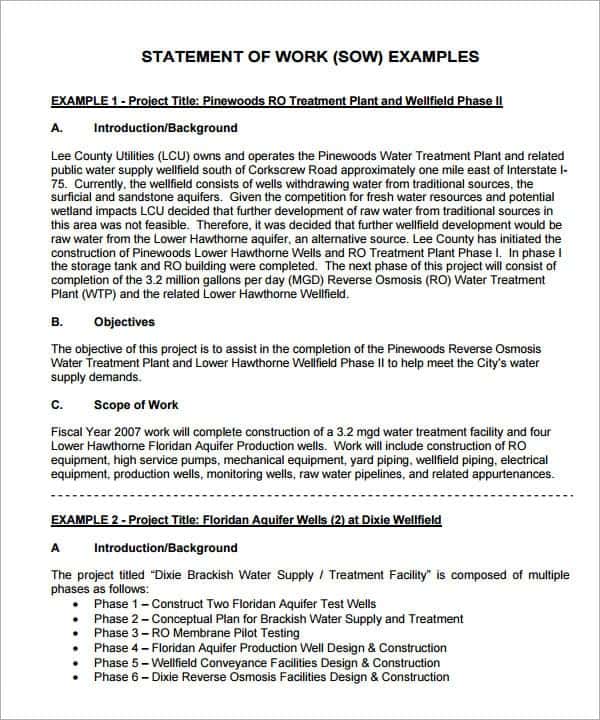

Free Statement of Work
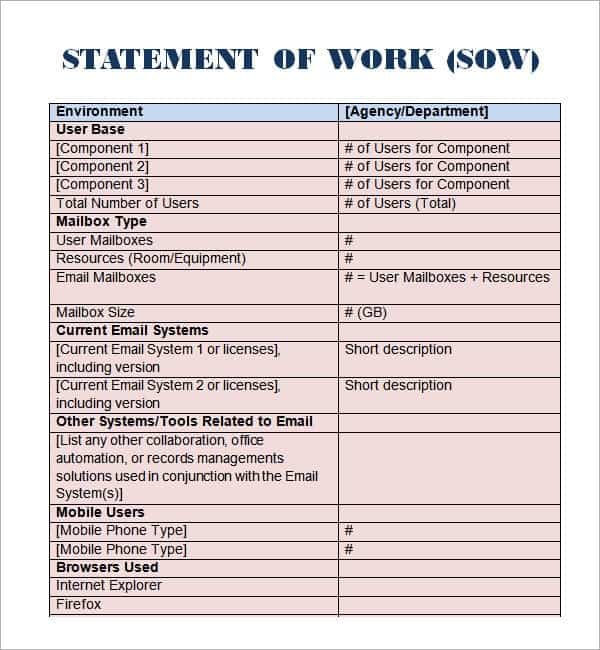
Statement of Work Example

Statement of Work Format
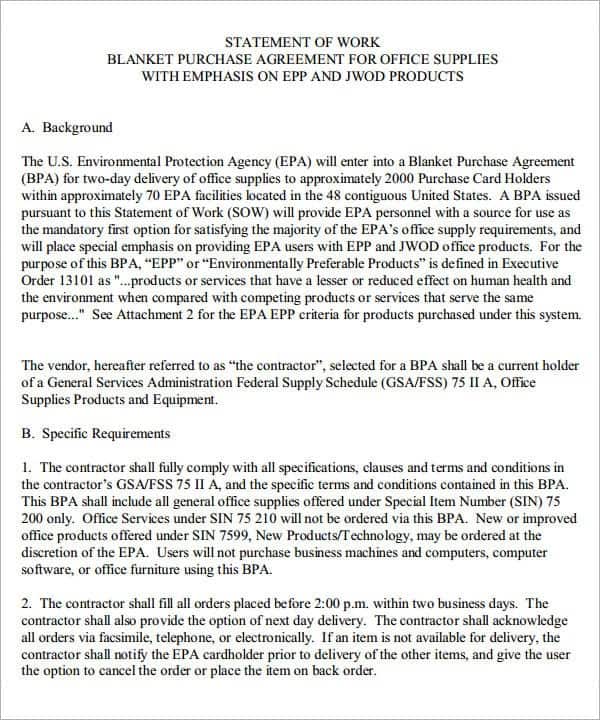
Statement of Work Template
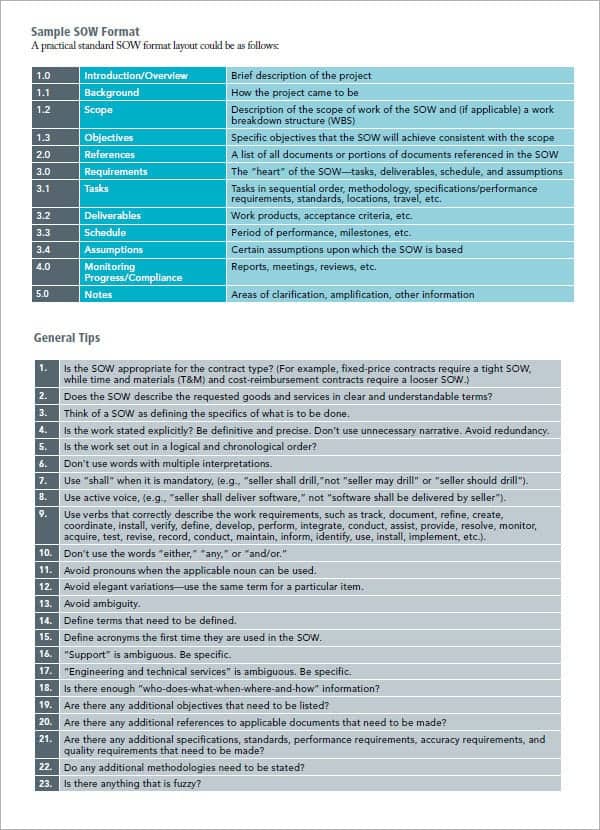
Statement of Work Format Example Free
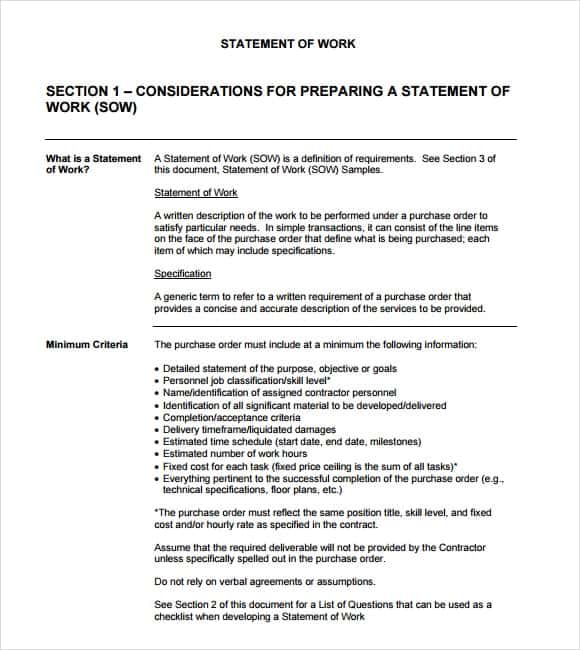
Sample Statement of Work
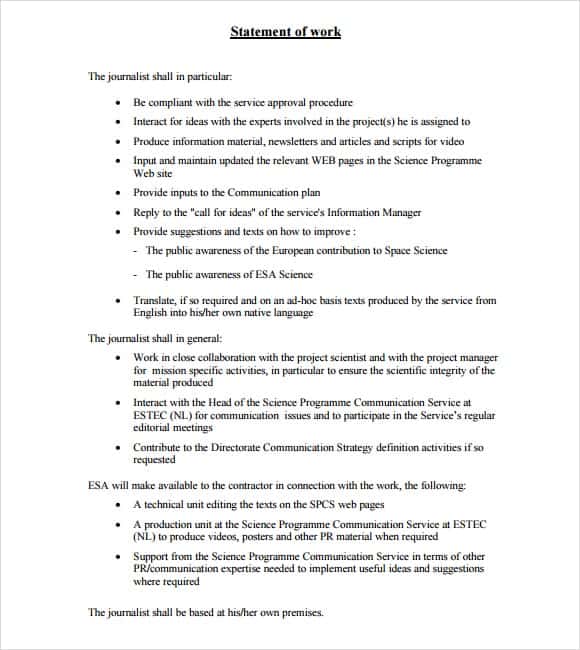
Statement of Work Contract
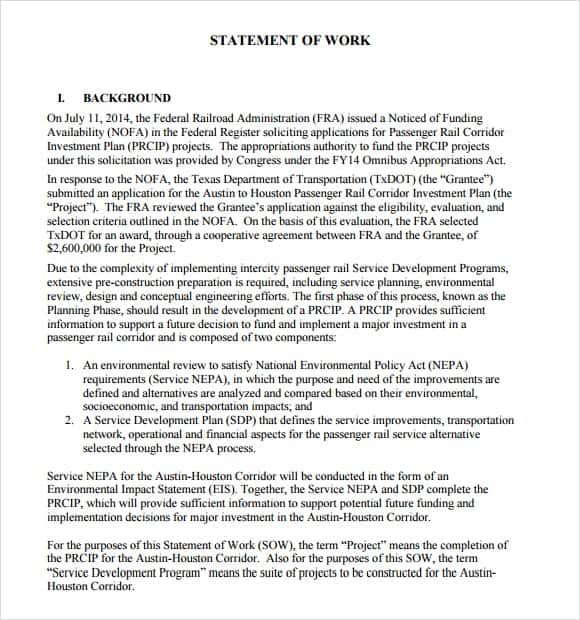
Frequently Asked Questions
What’s the difference between a statement of work and a contract?
A contract establishes the overall legal relationship and terms between two parties. A statement of work defines the specific tasks, deliverables, and timeline for a particular project. The SOW is often attached to or referenced within the broader contract.
Who is responsible for writing the statement of work?
Either the client or the contractor may draft the initial statement of work. It should always be reviewed and agreed upon by both parties before work begins, to make sure expectations are aligned.
Can a statement of work be changed after work begins?
Yes, but changes should go through a formal change management process outlined in the original SOW. Informal scope changes are a common source of disputes between clients and contractors.
Is a statement of work legally binding?
When signed by both parties and referenced within a contract, a statement of work is generally legally binding. It can be used as evidence of agreed-upon deliverables if a dispute arises.

You must be logged in to post a comment.